

How Handmade Pasta Is Made, Detail by Detail
A plate of handmade pasta has a kind of quiet confidence. The sauce clings rather than pools. The bite has presence, then gives way. Its shape seems inevitable, as if it could hold nothing else quite so well. Understanding how handmade pasta is made reveals why it belongs at the center of an Italian meal: it is not simply flour and eggs, but timing, touch, restraint, and attention to the plate that follows.
At Casa Lvnae & Lo Zingaro, handmade pasta is part of the pleasure of sitting down for an evening worth lingering over. It asks diners to notice the details - the texture, the aroma, the way a carefully made dough carries the flavor of a sauce. Carpe Diem. Order the pasta, pour the wine, and let dinner take its time.
How Handmade Pasta Is Made Begins With the Dough
The foundation is deceptively spare. Traditional egg pasta often begins with finely milled flour and eggs, sometimes with a little semolina, olive oil, or water depending on the desired texture and regional style. Yet each ingredient has a specific role. Flour provides structure. Yolks bring richness and color. Egg whites contribute moisture and binding. Semolina can add a slightly firmer, more rustic bite.
The choice of flour is not incidental. Soft wheat flour makes a smooth, supple dough suited to delicate ribbons and filled pasta. Semolina, made from durum wheat, brings a golden hue and a more pronounced chew. Many cooks blend the two, adjusting for the shape they plan to make and the sauce it will meet. A silkier dough may suit tender ravioli; a sturdier one may be better for ridged shapes designed to catch ragù.
The ingredients are gathered into a mound, with a well formed at the center for the eggs. A fork gradually pulls flour into the liquid until a shaggy mass develops. Then comes the work that cannot be rushed: kneading. The dough is pressed, folded, turned, and pressed again until it becomes cohesive, smooth, and elastic.
Too little kneading leaves it rough and prone to tearing. Too much force can make a dough tight and difficult to roll. Humidity, the size of the eggs, and the absorbency of the flour all change the calculation. This is why handmade pasta is guided by feel as much as by a written formula.
Resting Creates a Better Bite
After kneading, the dough rests, usually wrapped so its surface does not dry out. This pause allows the flour to fully hydrate and the gluten to relax. When the dough returns to the table, it is more pliable and less likely to snap back as it is rolled.
Resting may seem like an idle step, but it is one of the clearest differences between pasta that feels merely homemade and pasta that feels considered. The dough becomes easier to shape with precision. Its final texture becomes more tender, while retaining enough structure to stand up to cooking and sauce.
Rolling Pasta Is a Matter of Thickness
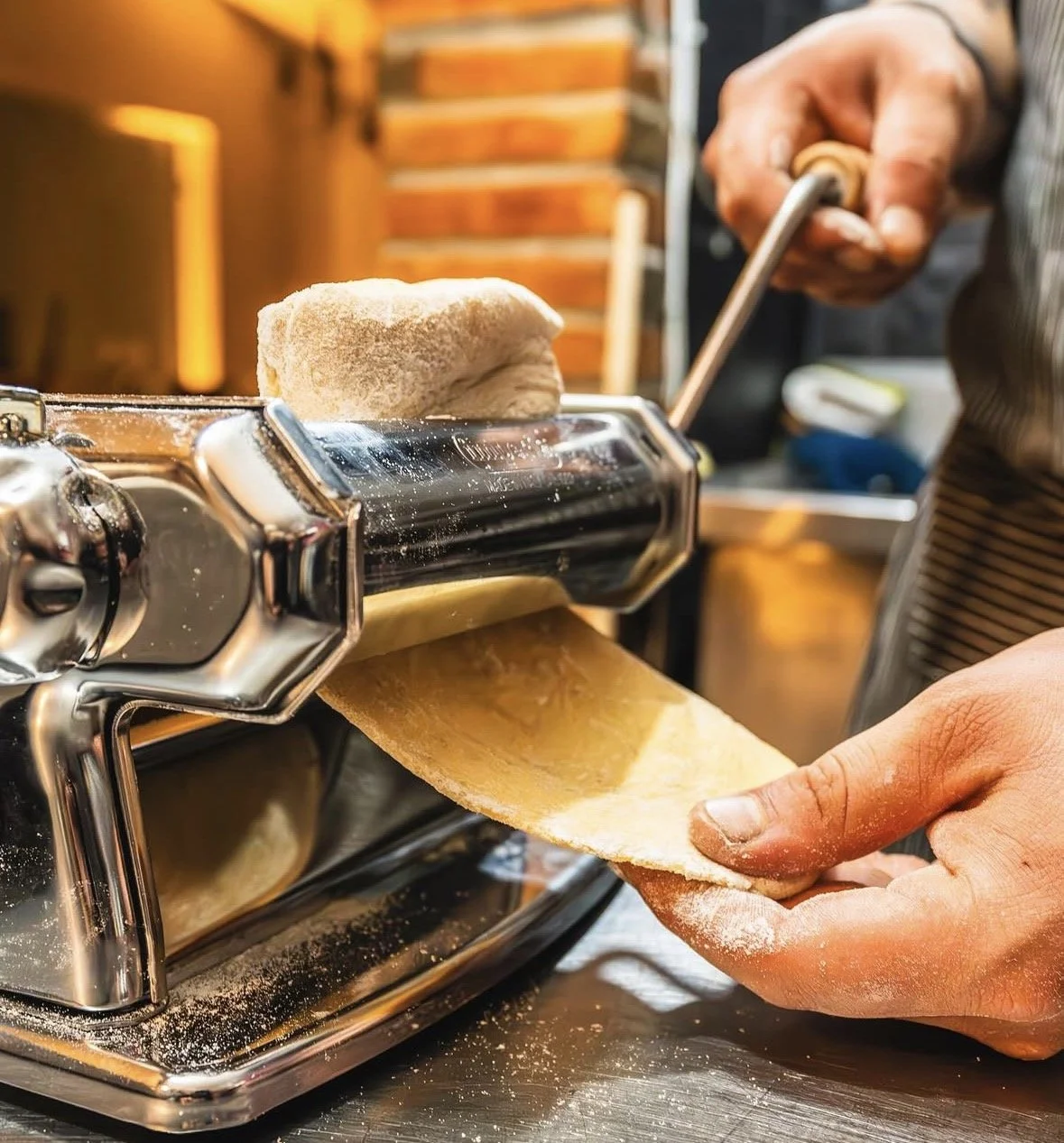
Once rested, the dough is divided into manageable portions and rolled. A rolling pin can create beautifully irregular sheets, while a pasta machine offers consistent thickness. Neither method is automatically superior. What matters is matching the thickness to the intended pasta and maintaining a light hand.
A sheet for tagliatelle should be thin enough to cook quickly and fold elegantly around a fork, but not so thin that it loses its bite. Pasta for filled shapes needs to be fine and flexible, yet strong enough to enclose its filling without breaking. Lasagna sheets need their own balance: substantial enough for layers, delicate enough to soften among sauce, cheese, and heat.
As the dough passes through progressively narrower settings, it is often folded and rolled again early in the process. This helps create an even sheet and a refined texture. The finished pasta should feel alive in the hand: smooth, lightly resilient, never brittle or gummy.
Shape Has a Purpose
Pasta shapes are not decorative extras. They are engineering, developed around how sauces behave. Long strands suit glossy emulsions, butter-based sauces, and finely textured ragùs that can coat every ribbon. Tubes and ridges hold heartier sauces with pieces of meat or vegetables. Curved shapes create little pockets for cream, cheese, and slow-cooked juices.
Filled pasta brings another layer of craft. A filling must be flavorful but not wet, balanced but not heavy. Ricotta may be drained before it is seasoned. Vegetables may be cooked down to concentrate their flavor. Meat fillings are often cooled fully before shaping. Each portion must be modest enough for the pasta to close securely, leaving a clean border that can be pressed, sealed, and cut.
The best filled pasta has proportion. You should taste the dough, the filling, and the sauce in a single forkful. When one overwhelms the others, the dish loses its poise.
Fresh Pasta Cooks Quickly, but Not Carelessly
Fresh pasta contains more moisture than dried pasta, so it cooks in minutes rather than ten or more. A pot of generously salted water should be at a lively boil before the pasta goes in. The salt seasons the dough itself, not just the cooking water, and helps bring the entire dish into focus.
Timing depends on thickness, shape, and whether the pasta is filled. There is no universal minute mark. The cook tests it. Properly cooked fresh pasta should have a tender exterior and a gentle resistance at the center. It should not be soft to the point of collapse.
The cooking water is worth saving. Its starch helps transform sauce and fat into a glossy coating that adheres to the pasta. Instead of placing pasta beneath a ladle of sauce, skilled cooks finish it in the pan. A little pasta water, heat, and movement bring the elements together. This final minute is where a sauce becomes part of the pasta rather than something sitting on top of it.
The Sauce Must Respect the Pasta
Fresh pasta is flavorful on its own, which is why it benefits from sauces with definition. A slow-cooked meat ragù may need broad ribbons or a shape with texture. A bright tomato sauce can suit nearly any form, provided it is reduced enough to coat rather than drown. Butter, herbs, citrus, mushrooms, and aged cheese can create remarkable dishes with fewer ingredients when each is handled well.
Richness also needs contrast. A luxurious egg-yolk dough may welcome acidity from tomato, wine, or lemon. Earthy mushrooms benefit from fresh herbs and a sharp cheese. A deeply savory sauce may need a final touch of pepper or a good olive oil to lift it. This is Italian cooking at its most persuasive: not excess, but balance.
There are trade-offs. Fresh pasta is not always the right choice for every dish. Dried pasta has a firmer structure that can be excellent with certain bold, long-simmered sauces. Fresh pasta asks for care, speed, and an understanding of its delicacy. Its reward is a texture that feels immediate and deeply satisfying.
Handmade Pasta Is Finished at the Table
The final details matter: the warmth of the bowl, the last grate of cheese, a torn basil leaf, a spoonful of sauce placed with intention. Pasta should arrive ready to eat, not waiting to be corrected. Its aroma should invite the first bite before conversation resumes.
That is the real appeal of handmade pasta. It turns a few elemental ingredients into something personal, shaped by the cook and completed by the occasion. Choose the bottle you have been saving, gather the people who make the evening brighter, and let the plate in front of you be a reason to stay a little longer.